




What Is AI-Powered Expense Tracking? A Complete Guide
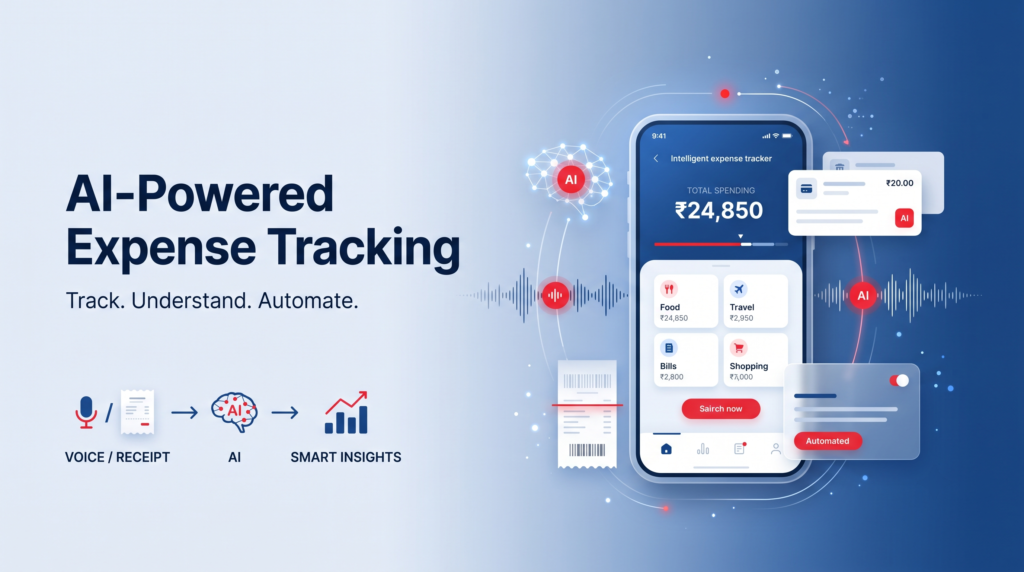
Managing business expenses manually can quickly become difficult as transaction volumes grow. Receipts, invoices, employee reimbursements, card payments, and recurring expenses can create a large amount of financial data to organize.
AI-powered expense tracking uses artificial intelligence to capture, categorize, analyze, and organize expense information with less manual effort. Instead of simply recording transactions, an AI-powered system can identify patterns, classify spending, flag unusual activity, and turn financial data into actionable insights.
What Is AI-Powered Expense Tracking?
AI-powered expense tracking is a technology-driven approach to recording and managing business expenses using artificial intelligence, machine learning, automation, and data processing.
A typical system can process information from sources such as:
- Digital receipts and invoices
- Bank and card transactions
- Employee expense submissions
- Business applications
- Accounting or ERP systems
AI can then extract relevant information, such as the merchant, amount, date, and expense category, and organize it for review.
The goal is not simply to eliminate spreadsheets. It is to create a more intelligent expense workflow where routine financial tasks require less manual input.
How Does AI Expense Tracking Work?
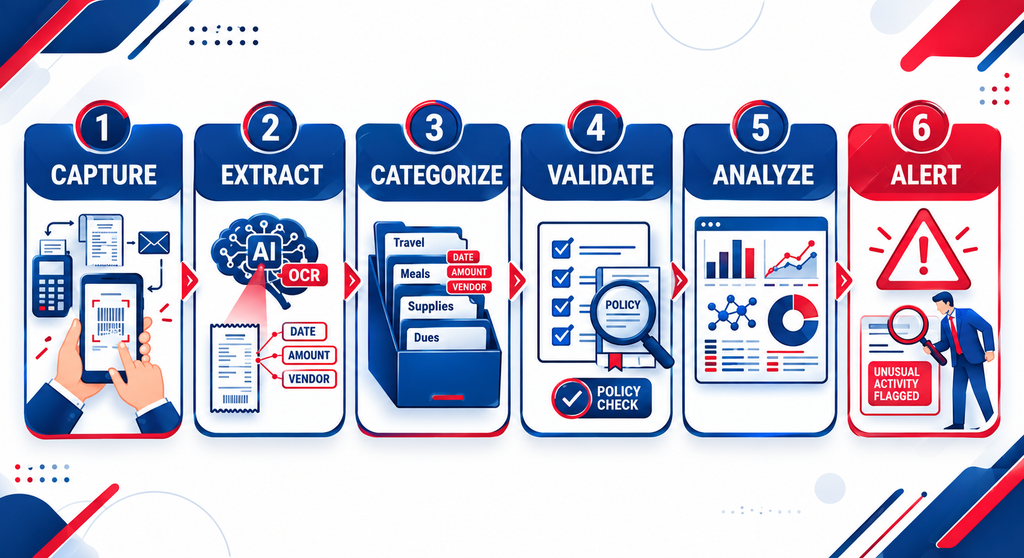
The exact workflow depends on the system, but the process generally follows these steps:
- Capture: The system receives transaction or receipt data.
- Extract: AI and document-processing technologies identify important information.
- Categorize: Expenses are assigned to appropriate categories based on available data and business rules.
- Validate: The system can check information against configured policies or approval workflows.
- Analyze: Spending data is converted into reports, trends, and dashboards.
- Alert: Unusual transactions, policy exceptions, or unexpected spending patterns can be highlighted for human review.
For example, an employee could submit a restaurant receipt after a business meeting. Instead of manually entering every field, an automated system can extract the receipt details, classify the transaction, associate it with the relevant employee or department, and send it through an approval workflow.
Key Benefits of AI-Powered Expense Tracking
1. Less Manual Data Entry
Finance teams spend less time copying information from receipts, invoices, and transaction records into spreadsheets or accounting systems.
2. Faster Expense Processing
Automated workflows can move expenses from submission to categorization and approval more efficiently, particularly when businesses handle large transaction volumes.
3. Better Spending Visibility
AI-assisted analytics can help businesses understand spending by department, category, employee, project, or period.
Good financial records are also important for monitoring business performance and supporting tax reporting. The IRS notes that businesses should maintain records that clearly show income and expenses and retain supporting documentation.
4. Anomaly Detection
AI can help identify transactions that differ from normal spending patterns. These alerts do not automatically prove fraud or errors, but they can help finance teams decide where human review is needed.
5. Smarter Decision-Making
Once expense information is structured, businesses can use dashboards and analytics to identify recurring costs, spending trends, and areas where budgets may need attention.
What Features Should an AI Expense Tracker Include?
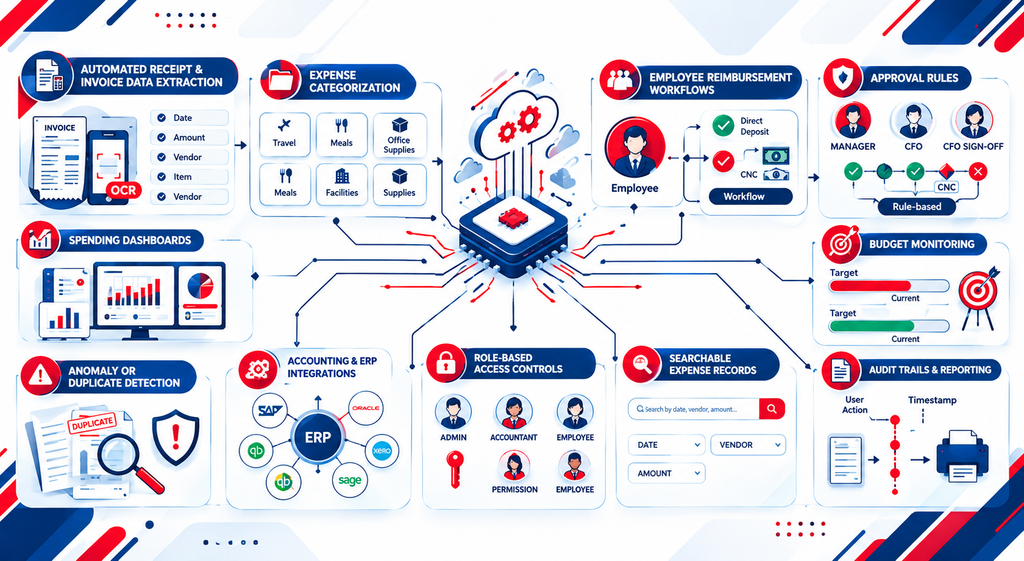
A capable solution may include:
- Automated receipt and invoice data extraction
- Expense categorization
- Employee reimbursement workflows
- Approval rules
- Spending dashboards
- Budget monitoring
- Anomaly or duplicate detection
- Accounting and ERP integrations
- Role-based access controls
- Searchable expense records
- Audit trails and reporting
The right feature set depends on the organization’s size, industry, financial processes, and existing technology stack.
Is AI Expense Tracking Suitable for Small Businesses?
Yes. Small businesses can benefit from automation even without a large finance department. A simpler system can reduce repetitive work while giving owners better visibility into where money is being spent.
However, automation should complement—not replace—financial controls. Businesses should establish clear approval rules, maintain supporting documents, review exceptions, and ensure that their systems produce accurate records.
The Future of Expense Management
Expense management is moving from simple transaction recording toward intelligent financial operations. AI can help businesses connect expense data with workflows, analytics, accounting platforms, and broader business systems.
For companies considering this transition, the important question is not simply whether AI can track expenses. It is whether the technology can integrate securely into existing processes and produce reliable information that people can actually use.
BWJ Tech Solutions focuses on AI transformation and custom software engineering, including AI integrations, predictive analytics, scalable backend systems, and real-time data processing. This makes AI-driven expense workflows a natural example of how intelligent automation can be connected to broader enterprise operations.