




How an Audit Management System Simplifies Business Audits
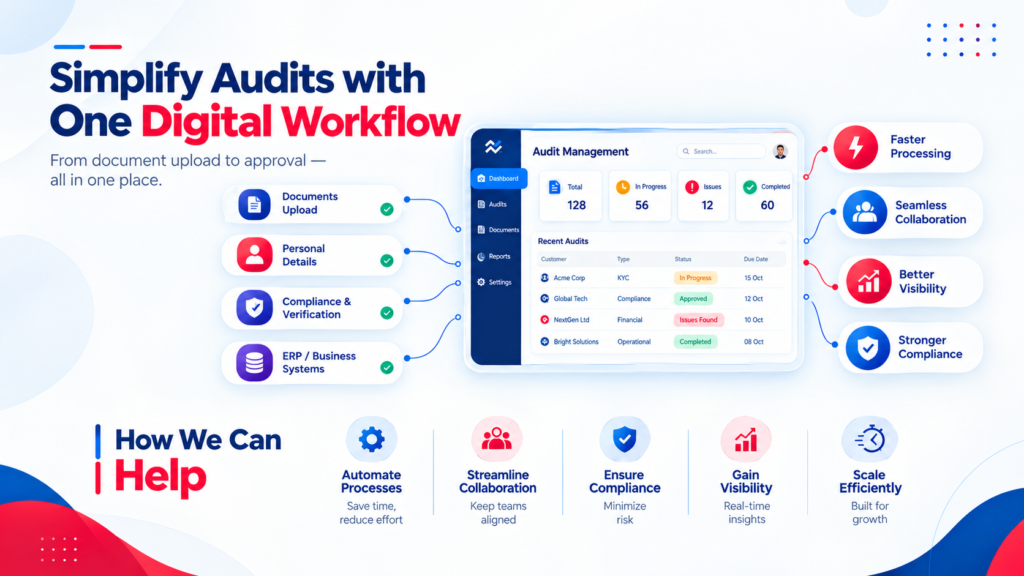
Business audits often involve multiple departments, documents, checklists, findings, approvals, and corrective actions. When these activities are managed through spreadsheets, emails, and disconnected files, it becomes difficult to maintain visibility and accountability.
An audit management system brings these activities into a centralized digital workflow. Instead of treating an audit as a collection of documents, organizations can manage planning, execution, evidence, findings, and follow-up as one connected process.
What Is an Audit Management System?
An audit management system is software that helps organizations plan, conduct, document, monitor, and close audits from a centralized platform.
Depending on the organization’s requirements, it can support:
- Audit planning and scheduling
- Auditor and department assignment
- Digital checklists and questionnaires
- Evidence and document management
- Finding and non-conformity tracking
- Corrective and preventive actions
- Approval workflows
- Audit reports and dashboards
- Historical audit records
This approach aligns well with structured audit practices. ISO 19011:2026, for example, provides guidance for managing audit programs and conducting management-system audits.
Why Traditional Audit Management Becomes Difficult
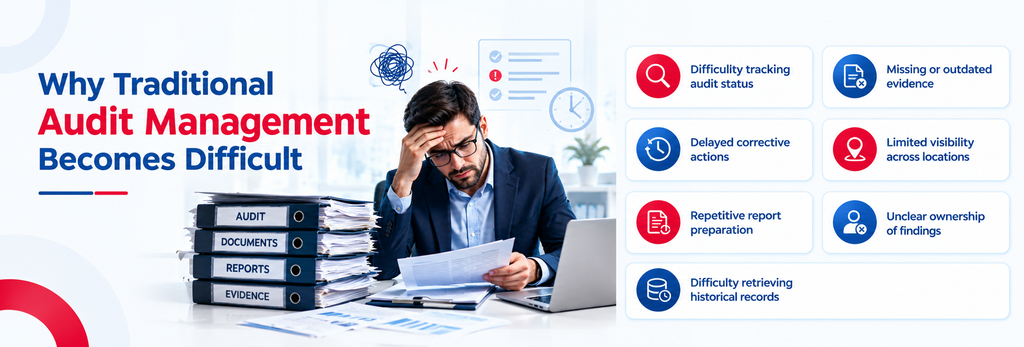
Manual audit processes can create several operational challenges. Information may be distributed across spreadsheets, email attachments, shared folders, and paper records.
Common problems include:
- Difficulty tracking audit status
- Missing or outdated evidence
- Delayed corrective actions
- Limited visibility across locations
- Repetitive report preparation
- Unclear ownership of findings
- Difficulty retrieving historical records
As organizations grow, these issues become harder to manage because more departments, sites, controls, and stakeholders become involved.
How an Audit Management System Simplifies Audits
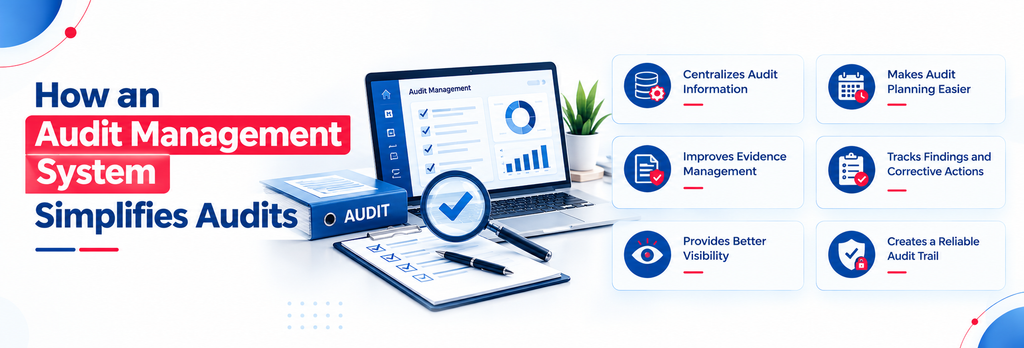
1. Centralizes Audit Information
A centralized system provides one place for audit schedules, checklists, evidence, findings, and reports. Teams can work from consistent information instead of searching across multiple files.
2. Makes Audit Planning Easier
Auditors can create audit plans, assign responsibilities, define timelines, and track progress through a structured workflow.
This helps organizations manage recurring audits and coordinate activities across departments or locations.
3. Improves Evidence Management
Supporting documents and audit evidence can be linked directly to relevant audit items. This creates a clearer connection between requirements, evidence, observations, and findings.
For technology-related audits, maintaining reliable audit information and protecting audit records are also important considerations. NIST guidance highlights the importance of protecting audit information from unauthorized access, modification, and deletion.
4. Tracks Findings and Corrective Actions
Finding an issue is only one part of an audit. Organizations also need to assign responsibility, establish deadlines, monitor remediation, and document closure.
An audit management system can connect each finding with its owner and corrective action, making follow-up easier to monitor.
5. Provides Better Visibility
Dashboards can give managers a consolidated view of open findings, upcoming audits, overdue actions, and audit progress.
The Institute of Internal Auditors also recognizes audit-management and GRC software as tools used for activities such as document management, issue management, action plans, testing, and reporting.
6. Creates a Reliable Audit Trail
A structured digital record can make it easier to understand what was submitted, reviewed, approved, changed, or closed. This is particularly valuable when organizations need historical information for internal reviews or compliance activities.
What Should You Look for in an Audit Management System?
Before implementing a platform, organizations should consider:
| Capability | Why It Matters |
|---|---|
| Audit scheduling | Organizes upcoming audits |
| Digital checklists | Standardizes audit execution |
| Evidence management | Keeps supporting records accessible |
| Finding management | Centralizes issues and observations |
| Corrective actions | Tracks remediation and ownership |
| Dashboards | Gives management real-time visibility |
| Role-based access | Helps control sensitive information |
| Reporting | Simplifies audit communication |
| Integrations | Connects audits with existing business systems |
How BWJ Tech Solutions Can Help
For organizations with complex or customized audit workflows, an off-the-shelf tool may not always match existing processes.
BWJ Tech Solutions provides custom software and enterprise business solutions, including an Audit Management System designed as a centralized command center for governance and compliance. Its solution focuses on transforming manual audit tracking into a real-time, data-driven framework across locations and departments.
A customized platform can also be designed around an organization’s existing approval workflows, reporting requirements, ERP environment, user roles, and compliance processes.

Final Thoughts
An audit management system can simplify business audits by connecting planning, execution, evidence, findings, corrective actions, and reporting within one digital workflow.
The goal is not simply to replace spreadsheets. It is to create a more structured and traceable audit process that gives teams better visibility and helps organizations respond to findings more systematically.
For businesses managing audits across multiple departments or locations, moving from fragmented manual processes to a centralized digital system can be an important step toward more consistent governance and compliance.