





How Automated KYC Improves Partner Onboarding
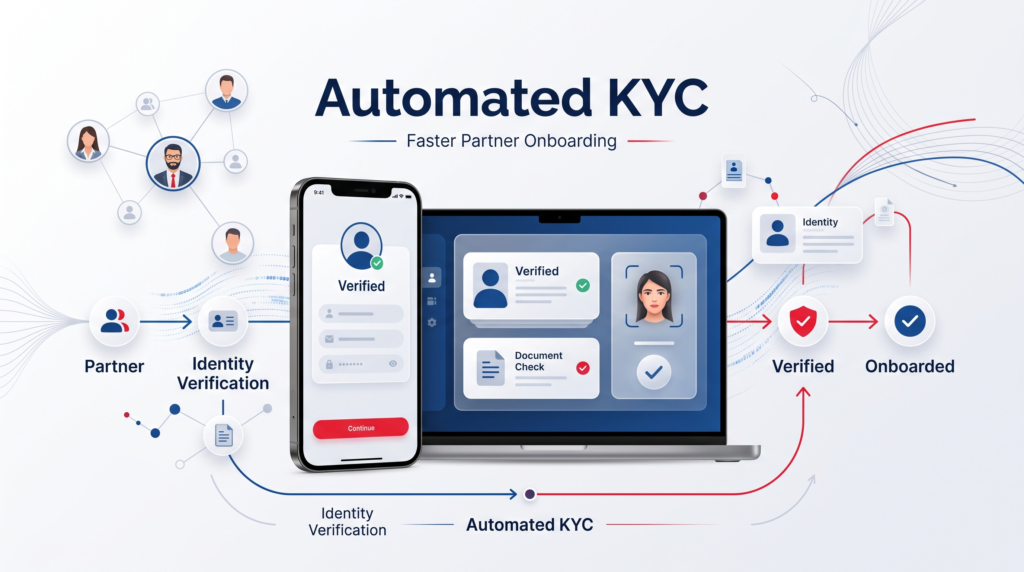
Partner onboarding often involves collecting documents, verifying identities, checking business information, completing compliance requirements, and getting approvals. When these tasks are handled manually, onboarding can become slow and difficult to scale.
Automated KYC for partner onboarding uses digital identity verification, document processing, workflow automation, and integrations to make this process faster and more consistent. Instead of relying entirely on manual checks, businesses can automate repetitive verification steps while keeping appropriate human oversight for exceptions and higher-risk cases.
What Is Automated KYC?
KYC, or Know Your Customer, refers to processes used to identify and verify customers or other relevant parties and understand the nature and risk of a business relationship.
Although the term traditionally refers to customers, similar verification workflows can be applied when onboarding business partners, vendors, merchants, agents, or other organizations.
Automated KYC can bring together:
- Identity and document verification
- Business information collection
- Data extraction
- Screening and risk checks
- Workflow automation
- Approval processes
- Audit records
- Third-party verification APIs
The exact checks required depend on the industry, jurisdiction, business relationship, and applicable regulations.
Why Partner Onboarding Can Become Difficult
A growing business may need to onboard dozens or even hundreds of partners. Manual onboarding can create several operational challenges:
- Repeated document collection
- Manual data entry
- Back-and-forth communication
- Delayed approvals
- Inconsistent verification
- Difficult status tracking
- Increased administrative workload
For regulated organizations, the process also needs appropriate customer due diligence and recordkeeping. The Reserve Bank of India, for example, requires regulated entities to follow customer identification and due-diligence procedures under its KYC framework.
How Automated KYC Improves Partner Onboarding
1. Faster Document Collection
Instead of relying on emails and spreadsheets, partners can submit required information through a centralized digital workflow.
The system can guide applicants through the required steps and identify missing information before the application reaches the review stage.
2. Automated Data Extraction
Document-processing technology can extract information from supported identity or business documents, reducing repetitive manual data entry.
This can also help create a consistent digital record that can be reviewed by the appropriate team.
3. Faster Identity Verification
Automated verification workflows can connect with appropriate identity and verification services through APIs.
Digital identity systems can support identification and verification during onboarding, while FATF guidance recognizes digital identity as a technology that can be used for customer identification and verification.
4. Better Workflow Management
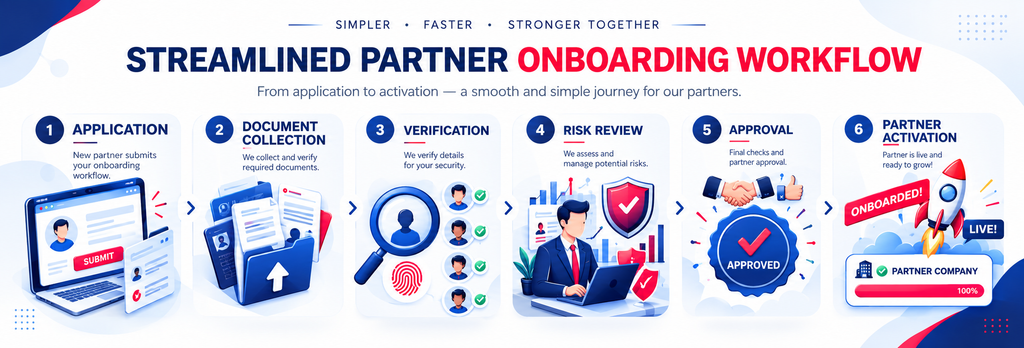
Automation can move an application through predefined stages:
Application → Document Collection → Verification → Risk Review → Approval → Partner Activation
If additional information is required, the system can send the application back to the appropriate stage instead of restarting the entire process.
5. Improved Consistency
Manual processes can vary depending on who reviews an application. Automated workflows can apply predefined rules consistently while allowing authorized employees to handle exceptions.
This is particularly useful when onboarding teams are growing.
6. Easier Compliance and Audit Tracking
A well-designed KYC workflow can maintain records of submitted information, verification results, decisions, and approval history.
However, automation does not remove regulatory responsibility. For example, RBI guidance makes clear that responsibility for customer due diligence remains with the regulated entity even where certain third-party KYC processes are relied upon.
A Simple Example
Imagine a marketplace onboarding a new business partner.
With a manual process, the partner may email documents to an employee, who then enters information into spreadsheets, verifies the details, requests corrections, and finally sends the application for approval.
With automated KYC, the partner can complete an online onboarding form, upload documents, and go through configured verification checks. The system can then route successful applications for approval while sending exceptions to a human reviewer.
The result is a more structured onboarding experience without removing human judgment where it matters.

What Should Businesses Consider Before Automating KYC?
Automation should be designed around the organization’s actual requirements. Important considerations include:
- Applicable regulatory requirements
- Data privacy and security
- Verification providers and API reliability
- Integration with CRM, ERP, or partner-management systems
- Risk-based workflows
- Human review and escalation
- Auditability
- Data retention requirements
- User experience
The objective should not simply be to automate everything. It should be to automate appropriate repetitive tasks while keeping people involved in important decisions.
Final Takeaway
Automated KYC can transform partner onboarding from a fragmented administrative process into a structured digital workflow. It can reduce repetitive work, improve consistency, provide better visibility, and help organizations handle growing onboarding volumes.
For businesses building a modern partner ecosystem, the strongest approach is to combine automation, secure integrations, reliable verification, and human oversight.
BWJ Tech Solutions can support businesses looking to build software-driven workflows around business process automation, API integrations, custom software, and secure digital applications—helping connect verification processes with the systems teams already use.