
Businesses today publish content across websites, mobile applications, e-commerce platforms, customer portals and other digital channels. Managing all these platforms separately can create unnecessary work, inconsistent information and difficulties when updating content.
This is where a Headless Content Management System (Headless CMS) offers a different approach. Instead of connecting content directly to a particular website design, it separates content management from content presentation. Businesses can manage their information centrally and deliver it to multiple digital platforms through APIs.
Let’s understand how this technology works and why it is becoming an important consideration for modern businesses.
What Is a Headless CMS?
A Headless CMS is a content management system that separates the backend, where content is created and stored, from the frontend, where users view that content.
In a traditional CMS, content management and website presentation are closely connected. A headless CMS removes this dependency by making content available through APIs such as REST or GraphQL.
For example, a business can create a product description once and deliver it to its website, mobile application and customer portal without maintaining separate copies of the same information.
In simple terms, one content management system can serve multiple digital experiences.
How Does Headless CMS Work?
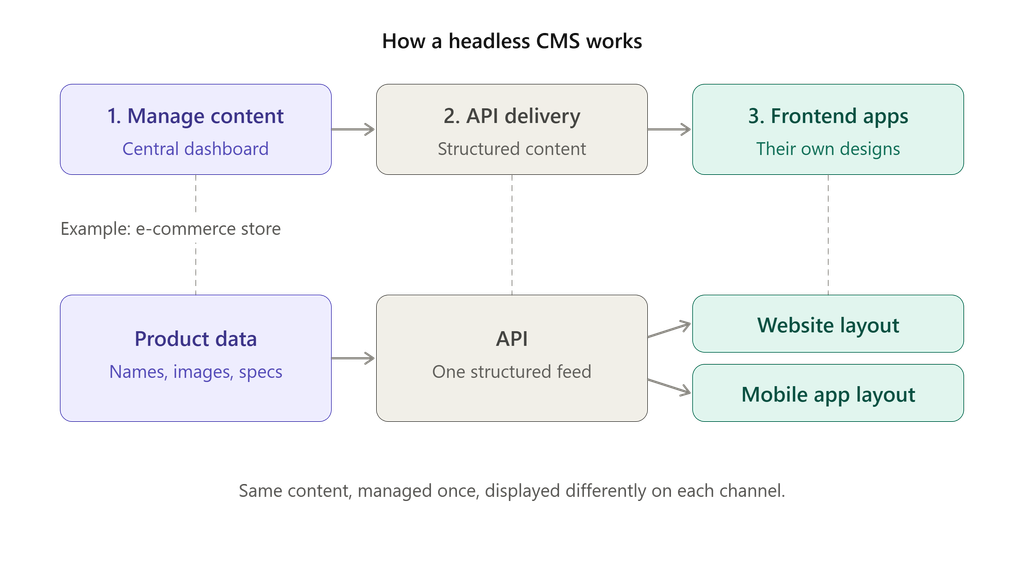
A headless CMS typically works through three main components:
- Content Management: Content teams create, edit and organize information using a centralized dashboard.
- API Integration: The CMS makes structured content available through APIs.
- Frontend Applications: Websites, mobile applications and other platforms request the content and display it using their own designs.
For example, an e-commerce business can manage product names, descriptions, images and specifications in one place. Its website and mobile application can retrieve that information through APIs and display it according to their respective interfaces.
This architecture allows developers to build different digital experiences without changing the underlying content management system.
Why Are Businesses Moving Towards Headless CMS?
As businesses expand their digital presence, managing content through a single website-focused system may become restrictive.
Here are some important reasons businesses consider headless architecture.
1. Content Distribution Across Multiple Platforms
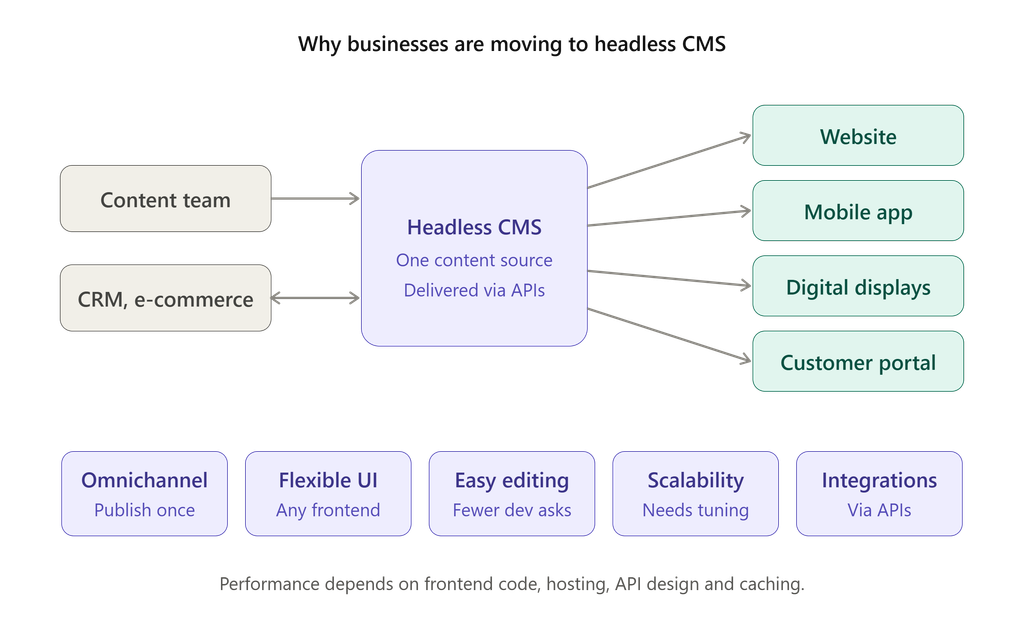
Businesses no longer communicate with customers through websites alone. Mobile applications, digital displays, customer portals and other platforms also require updated information.
A headless CMS allows teams to manage content centrally and distribute it across supported channels through APIs.
2. Greater Frontend Flexibility
Traditional CMS platforms often connect website presentation with predefined themes and templates.
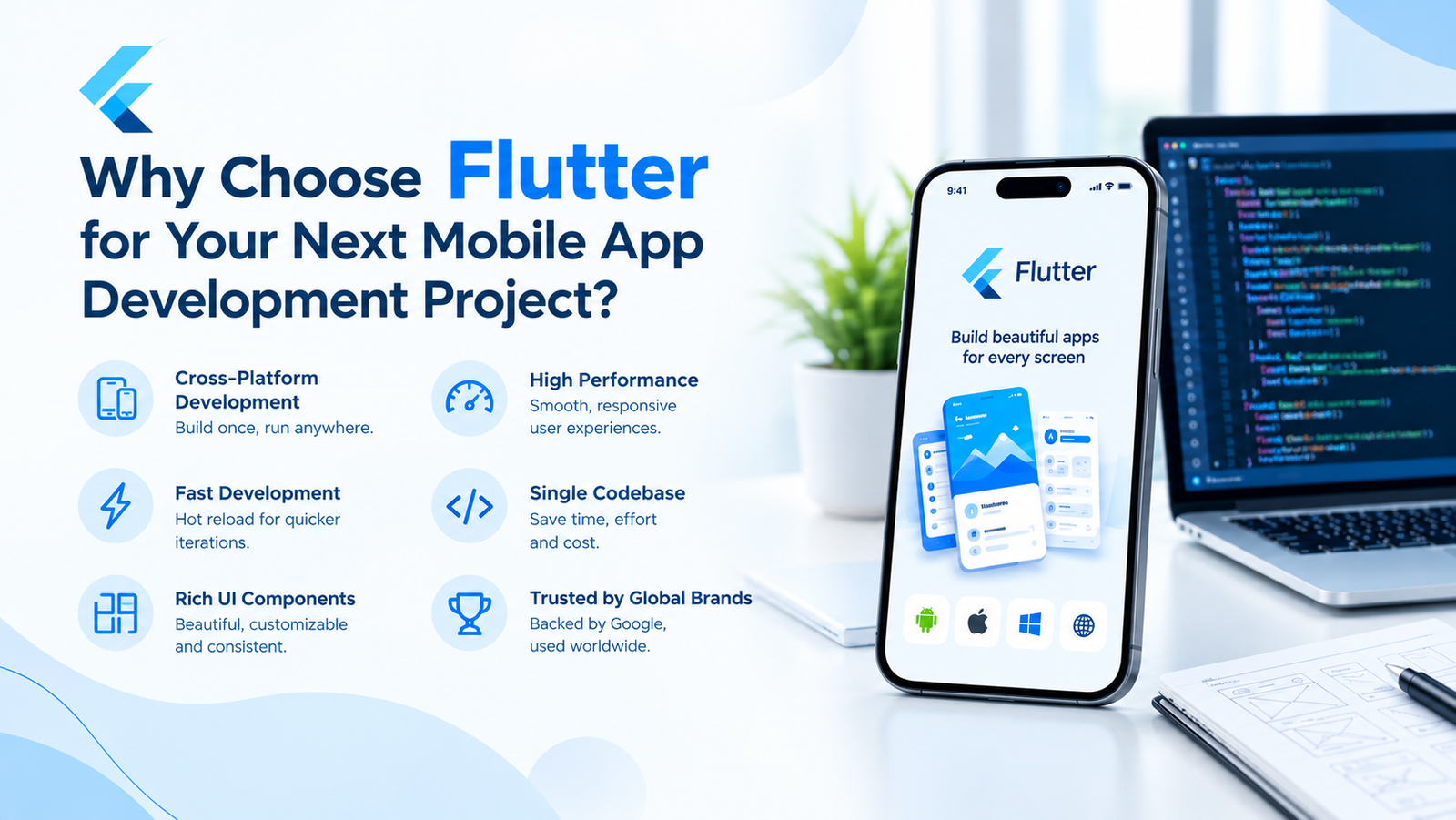
With a headless CMS, developers can independently build frontend experiences using technologies such as React, Next.js or Angular. This provides greater control over design, functionality and user experience.
3. Easier Content Management
Marketing teams can maintain content through a centralized management interface without depending on developers for every content update.
Once the content structure and publishing workflow are established, teams can manage information more consistently across connected platforms.
4. Scalability and Performance Opportunities
Separating the frontend from the backend gives developers more control over application architecture, caching, content delivery and deployment.
For example, a business can optimize its website frontend independently while continuing to use the same content repository.
However, improved performance is not automatic. It depends on frontend development, hosting, API design and caching strategies.
5. Better Integration Capabilities
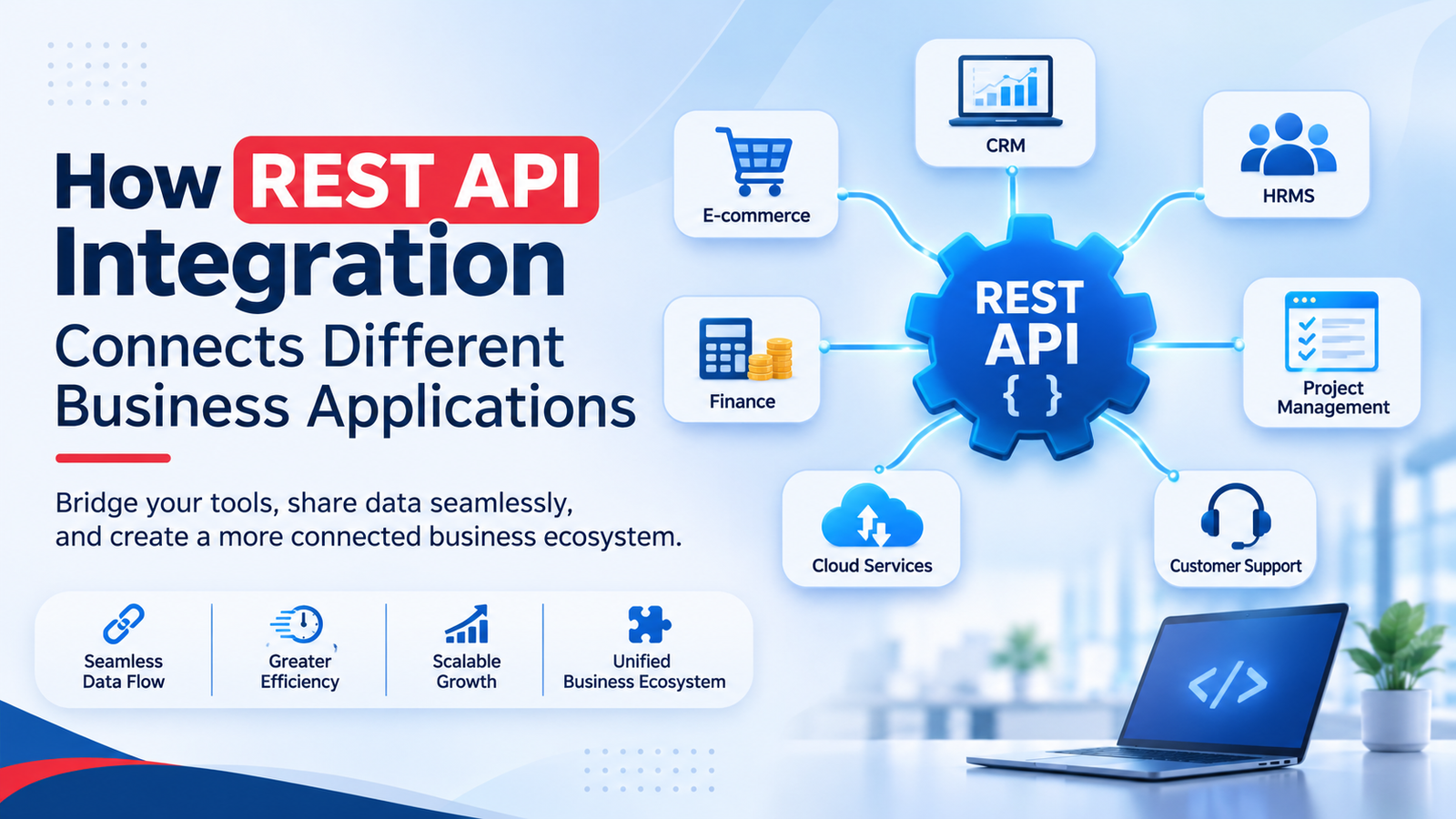
Headless CMS platforms can connect with different business applications through APIs.
This makes it possible to integrate content with e-commerce systems, CRM platforms, mobile applications and other digital services, depending on the available integrations.
Headless CMS vs. Traditional CMS
Both approaches help businesses manage digital content, but their architectures and capabilities differ.
| Feature | Traditional CMS | Headless CMS |
|---|---|---|
| Architecture | Connected frontend and backend | Separated frontend and backend |
| Content delivery | Primarily website-focused | Multiple API-connected platforms |
| Frontend flexibility | Often template-based | Framework-independent |
| Content reuse | Depends on platform capabilities | Designed for multi-channel reuse |
| Development | Often simpler to start | Requires frontend development |
| Customization | Within CMS architecture | Greater architectural flexibility |
A traditional CMS can still be an excellent choice for businesses that need a straightforward website with an integrated editing experience. A headless CMS becomes more useful when content must support multiple applications and customized digital experiences.
When Should a Business Consider Headless CMS?
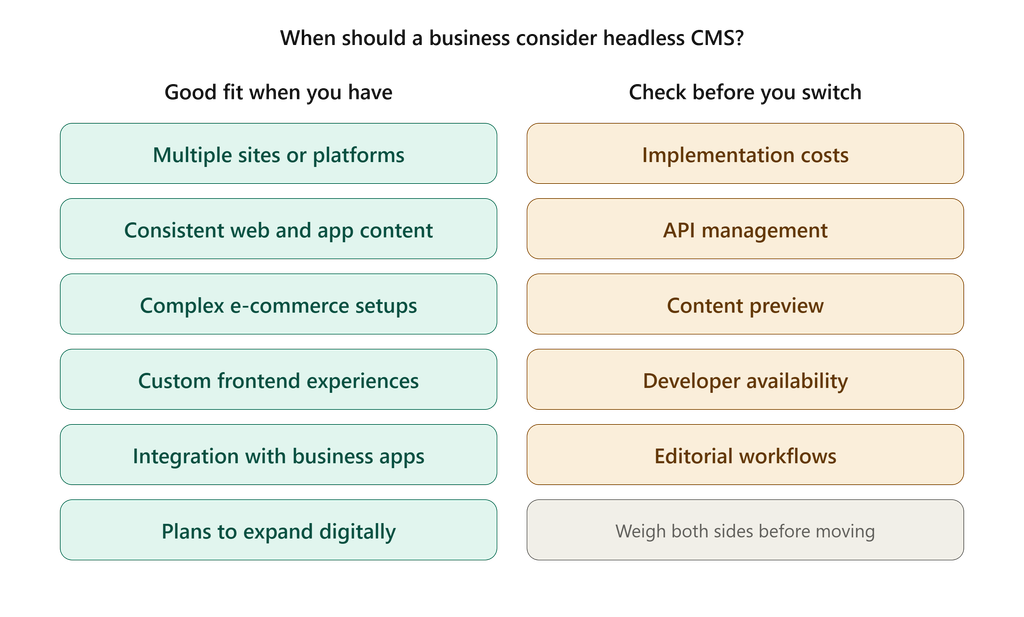
Headless CMS is particularly useful for businesses that:
- Manage multiple websites or digital platforms.
- Need consistent content across mobile applications and websites.
- Operate complex e-commerce platforms.
- Require customized frontend experiences.
- Want to integrate content with existing business applications.
- Expect their digital infrastructure to expand over time.
However, businesses should also consider implementation costs, API management, content preview functionality, developer availability and editorial workflows before making the transition.
How BWJ Tech Solutions Can Help
Choosing the right content management architecture is an important part of building a scalable digital ecosystem.
BWJ Tech Solutions provides web ecosystem development, including headless CMS integration, alongside modern frontend development and custom software engineering.
By combining technologies such as React, Next.js and API-based integrations, businesses can develop digital platforms that support flexible content delivery and evolving operational requirements.
The goal is not simply to adopt a new technology. It is to build a content infrastructure that supports how the business operates and grows.
Conclusion
Headless CMS is changing digital content management by separating content creation from content presentation. This gives businesses greater flexibility to distribute information across different platforms while allowing developers to build customized digital experiences.
Although it is not necessary for every website, it can be a valuable architecture for businesses managing multiple digital channels or planning more advanced digital solutions.
As digital experiences continue to expand, choosing the right content management architecture can help businesses manage information more efficiently and prepare their platforms for future requirements.